[Listen to the audio + music version of this piece by using the audio player up top.]
Apparently the true meaning of apocalypse, derived from the Greek word apokálypsis, is a revelation or unveiling, a disclosure of hidden knowledge. Today we use it to mean catastrophe — an end-of-the-world event, once a distant Bible School idea, now something I think about multiple times a week. But its original meaning is something softer, more dimensional. Apokálypsis means lifting the veil on divine truth or revealing what’s to come, rather than simply a total destruction or annihilation. It can signify the end of a corrupt era or the uncovering of a spiritual reality, something truer about humanity, consciousness or planes of existence.
The destruction is there, but it’s not the point. It’s the falling away, the caterpillar dissolving in order to become something else.
I read that definition last week and for a moment, my shoulders dropped.
We are embroiled in a war that none of the people in charge can properly explain. It’s creating devastating impacts on human lives, global supply chains and diplomacy between the US and its allies. It climaxed this week with the US president threatening war crimes to “destroy an entire civilization,” then a temporary and wobbly cease-fire. There is no clear end in sight.
In the US we are watching extreme corporate greed drive people into poverty, as CEOs make tens of millions while workers’ paychecks are squeezed thinner by rising costs.
We are witnessing and emotionally processing cascades of new evidence on pedophilia and other sexual abuse from business leaders and artists, priests and politicians. We are reckoning with deep longstanding patterns of oppressive and hypocritical behaviors from leaders claiming puritanical values. There will be many more reveals to come.
I’m not going to dismiss all this and say it’s ok, the apocalypse is coming and this is what needs to happen in order for us to find a new way forward. But the definition gives our painful reality one more color, a parable-like quality, that briefly makes the chaos feel like something other than pure collapse.
Maybe it’s how Christians feel when they let Jesus take the wheel.
I woke up the next morning to a pristine sky, slate clouds against a wide pale blue, a yellowing sideways light and a near-full moon that looked like a cloud itself as it sunk toward the horizon.
Later that day I found myself in Ross, balancing too many items in my arms. This is a toxic trait of mine, going in for one thing, then picking up many, many more but refusing to return to the front to pick up a basket. In this case I came on the hunt for sustainable, nontoxic, non-microplastic pollutant-free women’s underwear. I’m shopping at Ross so I can feel slightly less complicit in mainstream capitalism. I’m also wanting a deal, having a hard time stomaching online prices for fancy sustainable underwear — the merino wool versions highly recommended on Reddit were also upwards of $60 a pair — and I’m wanting to be able to hold it in my hands first instead of ordering it online, to assess if it will fit.
There’s a Target right next door, and they came up first on a local internet search for sustainable undies, but I’m still on boycott. Everything else was smaller online retailers, which felt better to support but required minimum orders for free shipping, and most of their sizing charts didn’t correspond to my body in a way that gave me confidence. These are the dilemmas of our time.
I find two sets at Ross, a Hanes version and some other brand, as I listen to a podcast on the Iran war and scan the other aisles. I think about gas prices skyrocketing, costs inflating to a new reality the reporter won’t even guess at other than saying it will be “much, much higher” than the current $6/gallon. I wonder what that does to daily life. Then I wonder if this is the painful push we need to get off fossil fuels.
I find a gourmet avocado oil, a big bag of Lesser Evil popcorn, a Bob’s Red Mill bean soup, a jar of the vegetarian bouillon we like, and a dermatologist-endorsed face mask. I am precariously balancing all of this on my forearm like I’m holding a baby, gripping the underwear’s tiny hangers in pinched fingers. For some reason I’m once again refusing to walk the extra 20 feet back to the front to pick up a basket. I’m almost done, why make the extra effort? Instead, I wait in line with arm muscles activated, eyes on the tall glass jar of oil as it threatens to slip, willing my tired fingers to maintain their grip.
I make it to the front and lean in, my treasures tumbling out of my arms. Usually I give some sheepish excuse to the cashier about how I found more than I came in for, feeling the need to explain my clumsy predicament to them and to myself. This time I just notice.
I can’t help but think of this as an extension of my lived reality as I casually continue to take on more and more and my feeling of overwhelm grows. But with every extra commitment, every “yes I can help, here’s my calendar link,” every saved news article to read later, every house project added to the list, my arms stretch wider, my grip weakens and my predicament grows.
I feel no shame for hunting at Ross, but when I notice the overload I get hard on myself. I feel like a woman who doesn’t have her shit together, didn’t have a clear strategy and doesn’t take care of her needs. It’s not a catastrophic trait — but it’s revealing.
What would it look like to pause? What if I took one extra one minute to walk to the front and mindfully load a basket? To move through the world with more dignity and ease? Why can’t I stop doing the same thing over and over?
Once I actually dropped a bottle of wine in a Trader Joes. My arms were too full of snacks, and the wine was the one to go. The bottle cracked when it hit the floor and bled into a wide puddle near the registers. You’d think that would have been my moment to change, but no. I guess a turning point happens when an event is so catastrophic and destructive that you can’t imagine ever doing it the same way again.
Back in the car, the interview continues. I think about the global supply chain ruptures, wondering about the way it will affect me and everyone else. Thank goodness for our local farmers markets, and our relatively simple lifestyle. We don’t cook meat at home, don’t eat much dairy, we make our own sourdough. But of course we’ll feel the crunch, everything will be impacted in some way, from the trucks that bring ingredients to the market to the fertilizer used on the farms. I can’t imagine how people living on fixed income or minimum wage are feeling, that is if they’re even hearing this news. I do a quick google search “Is Fox News reporting on gas prices?” The first headline that comes up, from a few weeks ago, reads “Admin official says there’s a ‘very good chance’ gas prices will be back to normal by summer.” Right.
If this war is an apocalypse, it is revealing war as a pointless and self-harming pursuit. Its qualities of aggression, ego and hubris are underwritten by domination and manipulation. Through reporting we can see the money being made off weapons, and through speculation we can learn of the potential blackmail behind the scenes. In a globally connected world, there are less secrets.
In the background, climate change continues its steady demonstration on faster and faster cycles that our actions have implications, there is no free lunch when you burn resources and chase material growth on Earth.
And AI is accelerating everything, simultaneously solving and creating new problems. and pushing us to the edge of our relationship with technology. We are building faster than we are asking why.
You can read more about my thoughts on AI in this recent piece:
Will it save us or destroy us?

“It is easy for me to imagine that the next great division of the world will be between people who wish to live as creatures and people who wish to live as machines.”
It’s so extreme to be experiencing the overlapping conflicts, the acceleration of societal and environmental collapse, conflict and polarization, technology racing toward singularity and at risk of overtaking us. The internet is our external source of interconnectedness, our shared consciousness that we built to show ourselves to ourselves.But it’s happening so fast that we barely have space to imagine what comes next, the more beautiful world we could dare to envision, and maybe that’s because we don’t yet believe in it — we need to go through the apokálypsis first.
Maybe the catalysts of this moment that feel so monumental — war, climate, cultural reckonings — really are agents of revelation, here to unearth the corruption and spell it out in no uncertain terms, here to hold a mirror to our own self-absorbed and self-destructive behavior, here to usher us into the next chapter but we won’t know what it says until we get there.
The devastation of World War II led directly to the creation of the United Nations, an imperfect but genuine attempt at new cooperation. I don’t know what comes out of this moment - it feels bigger than anything in human history - but here we are.
During the pandemic, we were living in a 12-unit apartment complex in East Hollywood, and we got excited about victory gardens. The building had a communal design, with a central patio and a wide set of front lawns. But no one really used it that way, and our attempts at neighbor meetups flopped. The victory garden seemed like a worthwhile experiment to grow vegetables and do less grocery shopping, prove out what was possible even in the heart of a city, and share the bounty with our neighbors.
We mocked up a potential layout in photoshop, with beans and tomato plants and chard stuffed into two vibrant raised beds placed on the far end of the front lawn. But when we sent our enthusiastic proposal to our building manager he wrote back:
I spoke to my office. Unfortunately it is not allowed.
Part of leaving LA was to find more space, more nature, more ease. We now have six large vegetable beds and dozens of fruit trees in the backyard.
Andy comes from a family of food lovers — his dad ran a catering business, his brother is a chef, and our nieces can comfortably dialogue on the terroir of a cheese — but he is more interested in how plants work. When we drive by rows of commercially-grown vegetables in central California he’s glued to the window — wow, he says. Look at all that broccoli. In our own garden he is scanning daily for changes in growth, wilting leaves and budding flowers. He’s asking Claude questions about soil, light and space. He is in awe of nature’s miracles, a beautiful practice that I can’t help but absorb and then feel the same.
Like my own dad was, Andy sees the world and wants to understand how it works. Once he knows how it works, he is empowered to do it himself. He appreciates a fine dish but really, he appreciates the alchemy of sun, soil, water and attention that went into growing its ingredients that hold such vibrant flavors. He admires the farmers that grow nearby and spend long days walking the rows, modifying the soil, understanding the angle of the sun. He is a great apocalypse partner.
In Minnesota, the recent ICE raids sparked sophisticated decentralized response networks. Signal text chains facilitated self-organized neighborhood watch systems and rapid response to enforcement incidents. Locals didn’t wait for institutions: they organized. It was simple and it worked, and it feels like a clue to what’s next.
These past years I’ve been getting to know small farmers, shop owners and neighbors. As things get stranger, the answers feel less online and more local. I need to know who’s growing what kind of food, where our water comes from, who is vulnerable inside their home and might need help. The real web is human.
This week, NASA launched the first moon mission in 50 years. Some people debated the Artemis II’s purpose and timing: it wasn’t meant to land on the moon, just slingshot around the back to collect data and practice for future missions and longer journeys like Mars. Was it a good use of public funds in this stretched moment, when we have so much to solve at home? Or is it crucial to keep moving forward with science and space exploration instead of stalling out in our self-made problems?
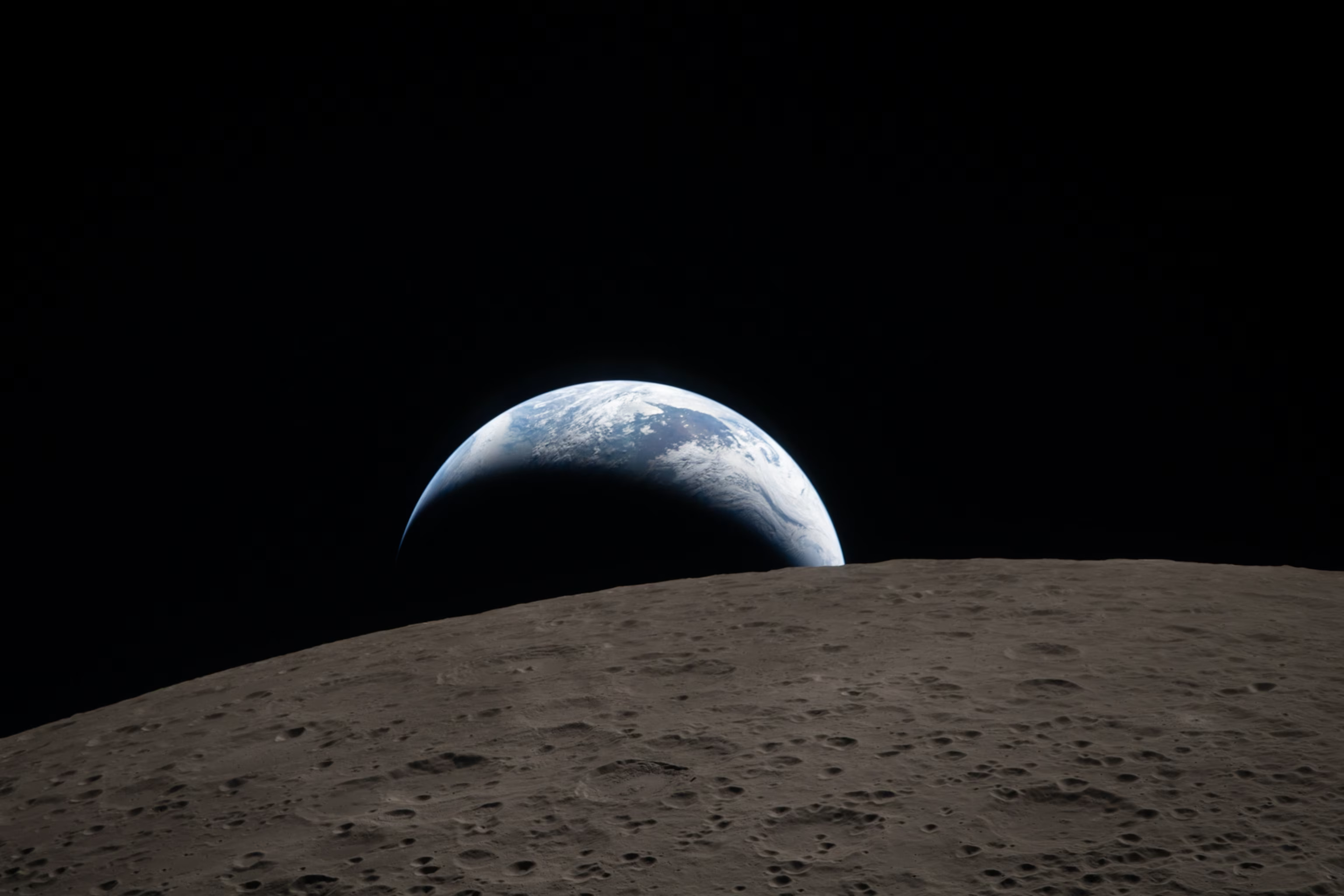
The Overview Effect is a name for the feeling astronauts get when they see the Earth from afar, which first happened in the 1960s during the Cuban Missile Crisis. Our entire complicated world and everything that makes up our daily lives, our thrills and pains, conflicts and accomplishments, is all happening on a single spinning orb in the vast sea of space. She just keeps rotating and reflecting, steady and wise. And seeing the Earth from that vantage point, out in space, seems one step closer to divine truth.
We have stepped into the unknown, and I feel my eyes adjusting. Now it’s about putting down what I don’t need to carry, taking one step at a time, and looking around to see who’s walking with me.
Backing track: Original, Logic synths. Inspired by something I faintly heard in the overhead music at Costco.
Thank you, Amy