,_New_York,_N.Y.,_ca._June_1947_(William_P._Gottlieb_00571).jpg)
In 2006 I moved to New York City to study nonprofit management, or the business of the arts. And in 2007, just miles from my Brooklyn apartment over on Wall Street, the recession started to unfold in a different sector.
My first real nonprofit job was at a music service organization called the Jazz Foundation of America, which I discovered as part of a group research project. From the beginning I was smitten — a longtime lover of jazz music, I had applied to the master’s program after getting rejected from a development job at a jazz organization back in the bay, so finding this one felt like kismet. I was also drawn to its vibe: at times casual and at others deeply serious, not unlike jazz music itself.
The job began as an internship, a requirement and one of the perks of doing the program in New York City. Internships earned a few units per semester, and I paid NYU by the unit, meaning it probably cost between $6k and $8k that semester in student loans to work for $5/hr. And thus, my entry into the economy of the arts.
But it was a great place to learn. Fast-paced and sometimes messy in process but real in its impact on individual lives, I stepped into the reality of how nonprofits get things done on urgent timelines and shoestring budgets. I got to know the challenges and benefits of getting old in a big city, the difference between royalties and one-time payouts 30 years after the fact, and the fine art of event production. We worked out of the Musicians Union building in Hell’s Kitchen, upstairs from the office for health insurance and retirement plans, and I came to understand why most of the jazzers had no other reason to come to this building — none of their club gigs were union gigs. Those were reserved for Broadway or Carnegie Hall.
The executive director was named Wendy. She was smart and big-hearted, rail-thin with wide blue eyes and long blonde curls. Sometimes clients would call her an angel, both for her floaty nature and her ability to move money in a crisis. Wendy had no formal business training, which I’d come to find out is common in the nonprofit sector — individuals with deep passion, charisma and street smarts often land in leadership roles, manage in unconventional ways and learn on the fly. She was successful doing it, leading the team to raise around $3M/year from an annual concert at the Apollo Theater plus a few other events and garnering a steady stream of large donor checks. Over a thousand musicians a year were supported with emergency rent checks, employment, and free medical care as a result.
In hindsight, I see how part of Wendy’s power was in the way she moved. Most days she cabbed through Manhattan in a flurry of activity and a rock and roll outfit of boot cut jeans, high-heel boots and a fur-edged trenchcoat, ripping back one-sentence answers on her BlackBerry as she zipped from fancy donor lunch to elder-musician home visit. The urgency was part of the message, the health crises and eviction notices facing these musicians were time-sensitive and required action. I understood her mystique but was also resistant to it — it was clearly working, but it felt like being adjacent to a tornado, with its focal point of intensity but leaving mild destruction in its wake. Everything was urgent, and process was negotiable. In hindisight I think part of my resistance was that it made me aware of my own potential for chaos, and as I studied organizational management I found myself working to suppress and control my own squiggly-brained nature in opposition to hers.
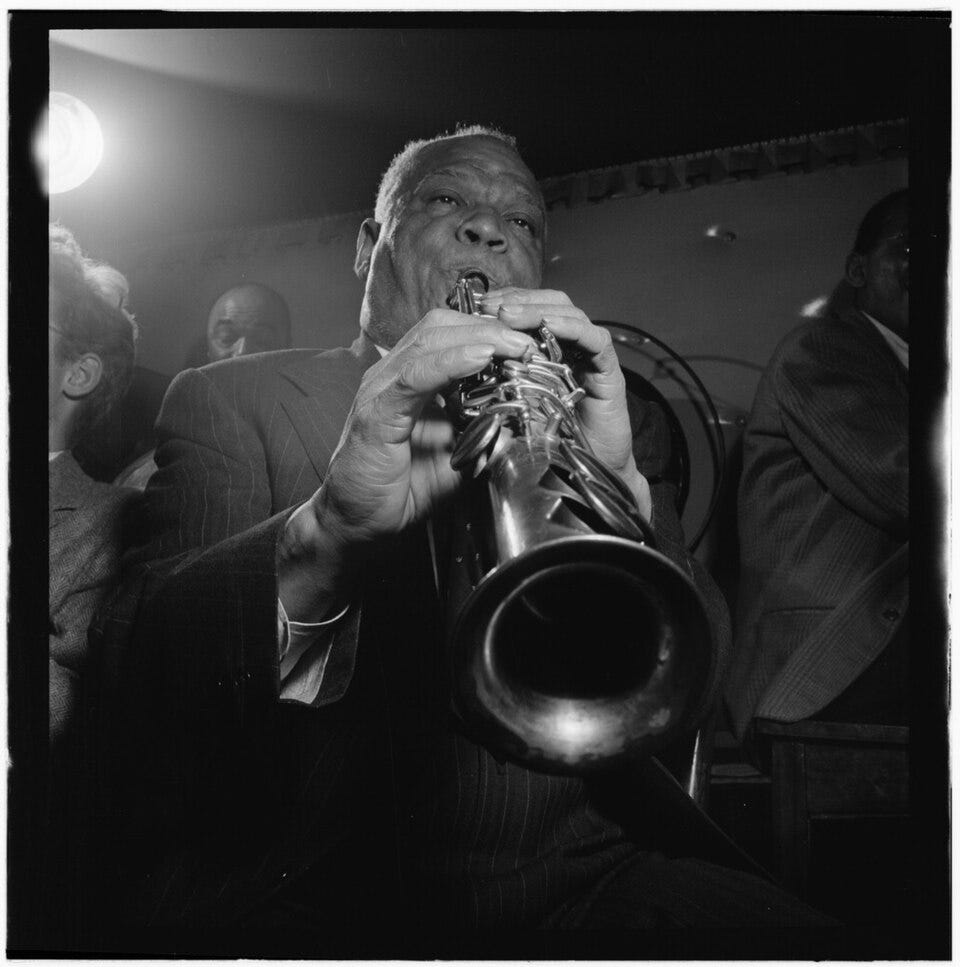
I’ll speak in generalizations for a moment, but many of the musicians I met were older Black men. They’d played with greats, but by their 70s they often lived in precarious rent-controlled living situations with no health insurance and the gigs were few and far between. They had no retirement plans in either sense of the word. They’d experienced booms and busts over their long careers, but no one had ever coached them about money or contract negotiation. They’d blow through the typical retirement age and it would only keep getting harder.
By 2007 the music industry was being actively upended by streaming, rewiring a generation to believe that music should be free and always available. This was an idea that I bought into initially, because it was so hard to resist the glorious feeling of accessing any song at any time. It felt like how music was meant to exist, free flowing without any gatekeepers. But of course it was too good to be true, and it meant the artists were no longer compensated the same way for countless hours spent creating an album and honing their craft. And without the right protections in place, new gatekeepers arrived in the form of software executives and investors, and the industry became yet another exploitative profit funnel with the artists near the bottom.
A few other inflection points had reshaped the local music landscape by the time I arrived. After 9/11, tourism in New York collapsed for months if not years as people reconsidered their fun travel plans to Manhattan, and the regular club and restaurant gigs dried up. As tourism gradually returned, these venues realized they could keep hiring music school students or using canned music for a fraction of the cost. They had gotten used to paying low fees, and built their budgets around it — why go back?
In 2005, Hurricane Katrina had decimated the New Orleans entertainment scene. Some bandleaders and sidemen were forced to relocate to cities like Houston and Jackson and start from scratch — different scene, no go-to band, gigs few and far between. Some stuck around and attempted to rebuild. For years, our social workers were on the phone with Louisianans every day, talking through next steps, arranging payments, connecting them to other nonprofits on the ground.
The Jazz Foundation’s pitch to the public was simple: these were the musicians who played on the soundtracks of our lives, built careers around sharing music and recorded the songs we loved and lived by. Now they are facing a crisis or unable to navigate retirement, and they need our help.
The mission was both emergency assistance and cultural preservation of an art form that had, by design, existed outside more traditional containers like classical music and Broadway, largely created and driven by people already up against bigger barriers to health, employment, and stability. When the financial collapse took hold in 2008 in New York, its impact on the stock market, financial and real estate markets may not have hit these musicians directly, but yet again downstream effects shrunk live audiences and disposable income for the arts. Other factors were more systemic or subtle: like medical emergencies, rising rent costs and no safety net after a lifetime of unconventional and sometimes exploitative employment.
Every day, two social workers sat in a small windowless inner office at the Jazz Foundation, taking calls. New or returning clients requested help with rent, instrument repair, a train ticket or an introduction to the Englewood Hospital doctor who treated artists for free, supposedly tearing up medical bills after a visit. The Jazz Foundation staff were artists in their own right: one was a Russian bebop sax player who’d taught himself QuickBooks and by his own admission barely qualified, but music and math go together and he did great work. A dark Berlin club guy turned event producer, whose heart had been won over by the cause, gruffly kept everyone in line in the months before a fundraiser. Our admin, donor’s daughter and blues singer, got errands done with an iced coffee in hand and spring in her step.
As I settled in, I realized I had to make peace with the tactic of emergency payouts. I came from a family of frugal-minded, coupon-cutting parents with government jobs and life insurance plans. I found myself caught between the natural virtue of it, a good-samaritan approach that says everyone deserves help, and a voice in my head that closely resembled my father’s, creeping in to ask, didn’t these guys learn about saving? Haven’t they heard of the “latte effect?” And how are payouts solving anything in the longer term?
But the more I learned, the more context I got: the bad record deals, the unexpected health crises, the steady years-long club gig that disappeared overnight. It was about as volatile a career path as you could find. At that time in school, social enterprises were a hot new concept, the glasses company Warby Parker or TOMS Shoes being prime examples of the “for profit, for good” business model. This idea that the right business structure could solve social problems while sustaining itself was attractive to me. But the Jazz Foundation forced me to reckon with its limits. Not everything can be engineered into a self-sustaining marketplace. Some problems are downstream of systems so broken that no clever model will fix them from the inside. And while we work on the systems, people still need to eat, still need to make rent, still need to feel that someone thinks their life and their work has value.
Turns out the either/or framing of strategic solutions versus direct relief is a false choice. The hot meal matters, and so does the policy that means fewer people need one in the future. Emergency support without any systemic vision is a bucket under a leaky roof; systemic work without any direct support is a renovation plan that leaves residents soaked while waiting. Centering humanity can look like holding both the immediate need and the longer arc without using one as an excuse to neglect the other.
When I was hired from intern to employee, Wendy had just secured half a million dollars to develop a “Jazz in the Schools” program, designed to bring quartets of elder musicians in the local public school systems. But no one had built it out yet, and it was only an idea with yet again some urgency behind it so the funds could be put to work and the employment could start. I loved the vision and offered to take it on.
The program relied on a donor to be able to pay the musicians, but to me it felt one step closer to that sustainable market-driven solution. It created purposeful work, allowing artists to do their thing and get paid for it, and it gave New York City kids a transformational live-music experience in the process. It had a regularity to it that I could imagine getting traction with other donors who might want to fund it ongoing, or maybe even getting city or state funding for it. And these weren’t hacked-together bands: they were the quiet masters of their craft, doing what they did best. To give them a chance to teach, showcase their talents and inspire the next generation was both service work and cultural preservation, and it felt like honoring the long arc of the art form in a whole new way.
I started by cold-calling dozens of schools across the boroughs, building a list of those open to hosting a quartet. Our social workers gave me a second list of musicians who were interested, mobile and could handle a school setting.
The first few gigs were an experiment, and I set each one in motion from the landline phone at my desk and hoped it worked. Mostly, it did — the quartets showed up, the kids were pumped, and once a teacher told me it was the first time some of their students had seen live music. The musicians were grateful and ready for more. When checks were cut beforehand, and the bandleader could pick them up on the way to the gig, it was the best version of the program. When the checks weren’t ready — because the bookkeeper had been out, or the process was otherwise delayed — I’d experience the particular shame and discomfort of financial insecurity firsthand, getting calls or in-person visits from a sad, frustrated or upset bandleader and feeling guilty for causing it. What would’ve been in other workplaces a simple administrative delay had possibly derailed this person’s ability to buy groceries or pay rent that week. Maybe I should’ve pushed the bookkeeper harder, I’d think, or somehow planned ahead better. Maybe this was just the nature of freelance work. All important learnings.
Both the urgency of the mission and the momentum of the post-Katrina and New York moments meant we were constantly swept into Wendy’s orbit and her unique way of getting things done. I remember responding to regular requests to reformat all documents and spreadsheets into long emails that could be read from her BlackBerry in cab. I remember drafting emails to donors under her sharp critique, based on her casual tone and her way of doing it. The day to day work stood in sharp contrast to the night classes at NYU, where I read marketing books and fancy Harvard Business School case studies on effective nonprofit management before walking back into work the next morning to face a flurry of emergency check requests and overdue donor tax receipts.
But as much as I craved less chaos, the workplace was the better teacher. There’s case studies, and there’s what actually happens. There’s marketing courses, and there’s watching someone do an excellent pitch to a CEO with his checkbook ready. Later I’d tell people the grad program was where I got the pedigree, the jobs were where I cut my teeth.
And people wanted to support it. The folks drawn to the Jazz Foundation weren’t looking to give to a shiny buttoned-up nonprofit institution — they were looking to connect with something that felt real and had heart. The Grammy Foundation’s service organization MusiCares was the cleaned-up older cousin, delicately holding a fancy appetizer at the party; we were the ones balancing a paper plate of mashed potatoes and stew, wearing yesterday’s shirt and playing the best stride piano you’d ever heard. The MusiCares budget was 5x what the Jazz Foundation raised, and they helped more than 10,000 musicians a year.
But people don’t give to statistics, they give because they feel a personal connection to the cause and the people doing the work. They give because they heard a story that moved them and maybe even broke their heart a little, then were presented with an opening, a way to help fix it. Raising charitable funds is an energetic exchange, and the right donors resonate with your wave, recognize the power of it and want to ride it with you. These lessons have shaped my approach to fundraising over twenty years and nearly $30M I’ve helped raise since.
Ultimately, however, I got stuck on how to think about the longer-term solution. Every act of assistance was indeed life-changing for the individual receiving it, but to me it still felt piecemeal. As compelling and real as it all was in the moment, I couldn’t stay anchored in the longer arc. It seemed we were temporarily tipping the scales of justice and dignity, building empathy and solving the immediate pain points, but leaving the same weights right there on the scales—the weight of economic injustice, racial bias, imploding creative industries, failing healthcare systems and skyrocketing housing costs, all revealing themselves through the situations in front of us. We could offer momentary relief but no new accountability for the exploitative and systemic points of failure, no external pathways to real-world economic opportunity, no real prevention measures so the next generation wouldn’t end up the same way.
The other rub was personal. My decision to go to grad school for arts management had come right on the heels of losing my father to a sudden infectious disease, a major life wakeup call. The choice was both purpose-driven, learning the hard way that life is short and we’d better make it count, and stability-driven after being deeply rattled by the tragedy. But I was also a lifelong musician, and inevitably my choice involved sacrifice — I gave up on the chance at a music career for the more stable and predictable path behind the scenes. And now here I was, in direct service to those who’d chosen the path I loved but rejected. It was disorienting. In some ways it justified my decision perfectly — I was right to believe that a music career was unstable, look at how these guys are ending up — but I still loved music deeply and felt at home onstage, and instead of lining up gigs for myself I was lining them up for others, musicians who had already had long full careers that in some ways I only dreamed of.
Was I there to learn from the mistakes and pitfalls, and create some version of my own hybrid path?

Ultimately the Jazz Foundation wasn’t my long-term home, because I couldn't stop pulling at the thread. Every month of emergency checks raised the same question: what would have to be true about the world for this check to not be necessary? I believed in the work, and I still do, but I realized I’m more built for the upstream argument, for the place where the problem can get interrupted rather than where it plays out. I wanted to see a world where artists could age with dignity not because a nonprofit wrote them a check, but because the systems around them hadn't failed them in the first place. That's a different kind of fight, and I eventually had to go find it.
Before I left, I had many memorable moments. One afternoon, an artist named Jimmy Norman invited me to record backup vocals on West 73rd St. at his home studio. As Jimmy tells it, he co-wrote parts of the tune “Time Is on My Side” made famous by the Rolling Stones and never saw a dime for it. We recorded in his living room with the monitors at full volume, the entire track playing back into the room and inevitably picked up again on our mics — Jimmy’s preferred monitoring style. It created a washy, psychedelic echo that I came to think of as his own flavor of reverb.
One of my Jazz in the Schools artists was piano player and educator Bertha Hope, and I watched her lead an elementary school assembly for hundreds of kids where she masterfully held them in the palm of her hand through music, movement, presence. That was when I realized I should’ve been onsite at the schools all along, watching and learning from the gigs I was booking instead of answering phones at my desk. I learned that being responsible means being hands-on.
In August 2007, two months after the first hedge funds collapsed, I attended a spectacular end-of-life celebration for legendary jazz drummer Max Roach at Riverside Church. It was filled wall to wall with locals, fans and folks like Sonny Rollins and Sheila Jordan, Roy Haynes and mayor David Dinkins, the poet Maya Angelou. Roach had pioneered bebop drumming and in many ways shaped the jazz music that came next. He was also active in the civil rights movement and composed music with messages of justice.
Outside, the financial system was beginning to crack under the weight of its own abstraction — financial instruments so complex that almost no one could explain what they were built on. Inside the church, two thousand people were gathered around something whose value needed no explanation at all. Max Roach had spent his life insisting that music and justice were the same project. The room full of people who showed up felt in that moment like its own kind of counter-argument to what was unraveling a few miles downtown. When something is that kind of real, it holds its value across other kinds of collapse.
As I moved out of direct service and into other kinds of impact work, I stayed anchored to the same throughline: finding ways to restore dignity and well-being for people who weren’t experiencing it. My time in New York nonprofits taught me that justice can look less like a perfect solution, and more like a gentle correction toward more humanity. Different types of people are a match for different types of service work. And if we take human needs first, the systemic breakdowns reveal themselves to be addressed in other forms.
I’ve also made peace with my personality and my chaotic faultlines. For a long time I was ashamed or afraid of mine — ashamed of being messy, afraid of pulling others into my tornado and causing more mess. This meant moving fast, shooting off responses, bouncing between ideas, leaving other ideas half-finished. But the reality is that we all carry a degree of chaos, and in the right circumstances and containers it can become a virtue, a rhythm section that won’t quite stay on the beat but drives the motion, which is sometimes what makes the music worth listening to. The chaos is the jazz. A world without any of it would be quieter and less interesting.
When I think back to those years of recession and abundance, I feel a deep fondness for Wendy and our ragtag team of artists turned administrators, and a deep gratitude for the jazzers who taught me that life can be long and the extremes can be wide. But if we learn to trust each other and we’re willing to ask for help when we need it, we can keep the music playing.
Thanks, Amy