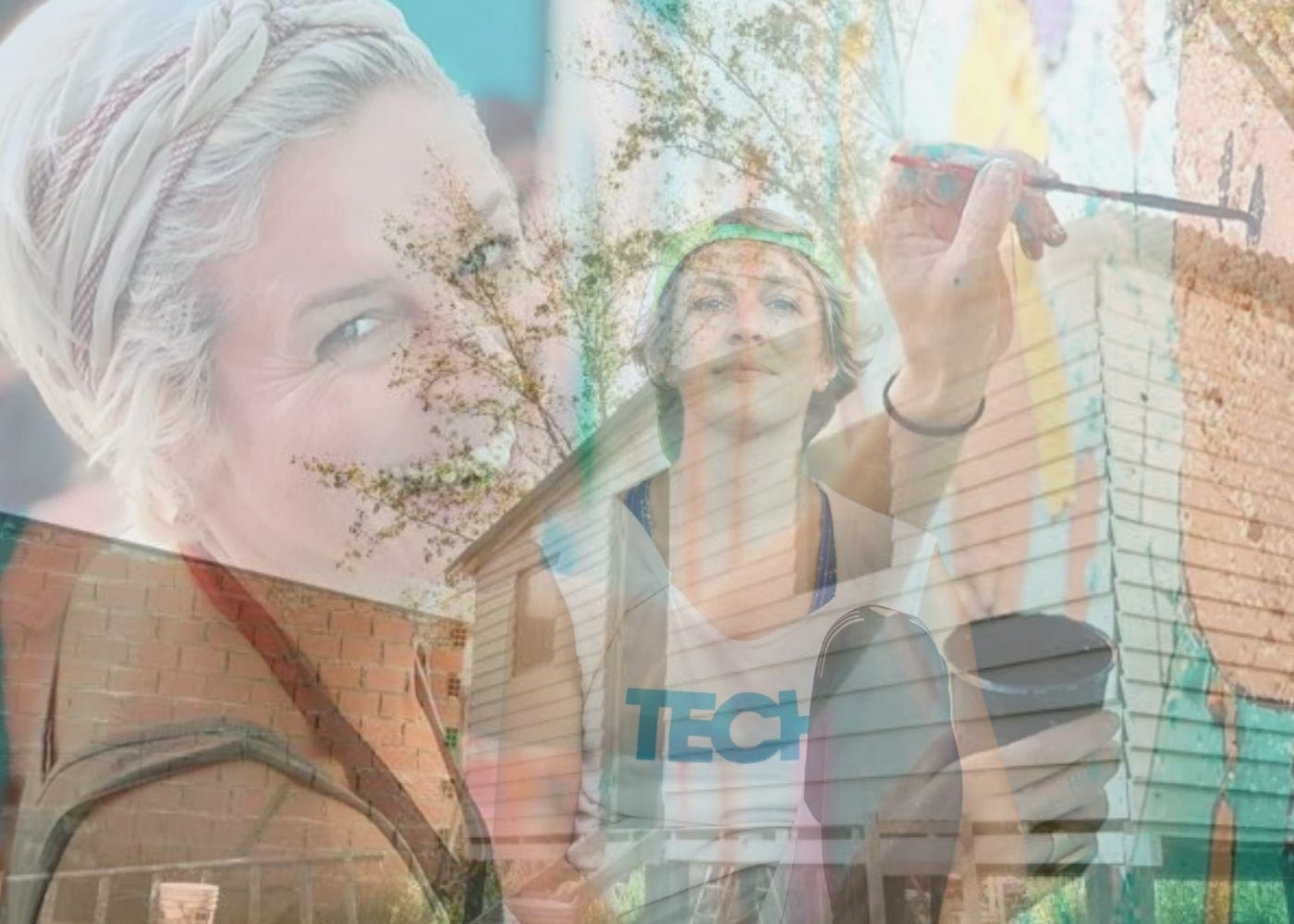
In late 2015 I co-founded an impact travel company called Journey. Our vision was a pure one: best-in-class international travel experiences with social impact projects at the center, in a 5 or 6-day deep-dive that could birth empathy and create lasting community.
We led hundreds of people on these journeys. We watched them form bonds, come home and make life-changing decisions, shift their understanding about the world and their place in it. One of our early Journeyers described it as “if Habitat for Humanity and a yoga retreat had a baby.”
The experience design worked. The business model did not.
After my time in the anti-trafficking space came to an end, I was between jobs and without a real plan. Almost immediately I got swooped up by my friend Taylor, who was building a crowdfunding tech company with a new angle: a platform that helped anyone fundraise for an impact project by making personal videos for each of their friends. With the ask “the cost of a coffee a day” over a few months, gifts were 5-10x the average online donation. He needed someone to sell it to nonprofits, and I was a perfect fit.
We worked on that company together for two years, but it ultimately began to fail. Not in the impact sense — $4M was raised through the platform for nonprofit projects — but as a the business it became impossible to support a team of developers, designers and partnerships leads all on modest nonprofit setup fees and a low percentage of funds raised.
I wasn’t in charge, and I was also getting excited about a different and separate idea: instead of purely funding the project, why not take people to see their impact? Taylor had been on a few impact trips, and we’d both been to Southeast Asia to visit the anti-trafficking programs — read about it here:

When I finally visited Cambodia I couldn’t believe that I’d worked at that org for years without seeing the work firsthand. I came home both galvanized and overwhelmed by the complexity of it: we were funding local training, health and empowerment programs, but we were also attempting to disrupt and rebalance gender and power dynamics, in a country facing decades of post-genocidal trauma, low on resources and deeply entrenched in current brothel culture. The trip gave me context.
Taylor is what people call a born leader. He’s a tall blonde Canadian, a former bodybuilder turned firefighter turned entrepreneur. He’s charismatic and funny, deeply passionate abut the things that matter to him, and driven to do big things. Like many others, I was drawn to him - not in a romantic way (although many others were) but in an ideological and unspoken kinship kind of way where we offered something to one another: I brought a level of experience and depth working on these complex social issues, he was great at painting a big vision and getting people onboard.
In the winter of that first year, Taylor planned a surf trip to Hawaii to work on our new idea, and at the last minute he invited me to join. I said sure, why not. We’d known each other for years, and we’d traveled together while working on the crowdfunding startup. But when he sent me the airbnb link he warned me that we’d be sharing a small hut in the backyard of a larger home, with a single queen-sized bed.
That first night I remember lying on my back, staring at the ceiling and pushing off an undefined blanket of shame—I was married, and married women weren’t supposed to even platonically share a bed with another man. Right? To be clear, nothing happened, nothing was going to happen and I was sure of that. Then another feeling emerged, a part of me that relished in the fact that I was doing life my own way. I wasn’t actually worried about outside perception, all that mattered was my own intention. I was clear, that was the point. So what was the problem exactly? Taylor and I were kindred souls, locking in to build the dream company and the dream lifestyle: work from anywhere, with our friends, making change, changing norms. The rule-abider in me felt unsteady, the seeker was pleased.
We woke up into day one of our own entrepreneurial retreat, ready to work. We popped our computers open in the open-air hacienda as heavy rain fell on all sides, and we contentedly plugged away at the bones of a business: a calendar, a marketing plan to book travelers, a roadmap to raise philanthropic capital and get it all off the ground. It felt good to ditch nonprofit and intentionally design a for-purpose, for-profit structure. I’d grown up alongside the first silicon valley tech boom, and watched the early flows of capital into tech, but I had judgement — too often capital seemed to land with convenience apps and mindless games, things that weren’t helping the world. I finally had my own entry point, on my own terms, to steer some of that capital toward what I considered a social good.
When Taylor gets excited about something, he swings big and hard, which means that he doesn’t mind selling it to everyone around him. He’s a seasoned public speaker, and he knows the formula for telling stories that move people to action.
This is not how I’m wired. As an early vegetarian, I was never a proselytizer. I didn’t pressure my preteen friends to convert. Instead I waited to be asked why I didn’t eat meat, then shared the facts about environmental impact and animal rights and my pet chickens. It was an invitation to go deeper, a future possibility - god forbid I make them uncomfortable with their own choices. Taking into account the meat industry’s effect on climate catastrophe these past 30 years, I probably should’ve gone harder. Real change usually requires salespeople.
Taylor can be polarizing. He’s Type A, outspoken and almost fanatical about his routines, his beliefs, his businesses - this is part of his formula for success. He has many fans and deep friends, people who see him and love him for who he is: a leader and a coach, a changemaker and a businessman. They understand his salesmanship as the way he makes things happen in the world. There’s also a handful of people don’t trust him, which comes with the territory. Radars up, exhausted by being sold to, some people keep their defenses high. Hence why I don’t like to sell — my own radar’s up too.
Our differences seemed to make us stronger, and we balanced each other out in a work-husband, work-wife kind of way. We had many overlapping friend groups, and a common question I’d get during that time was: “What’s it like to work with Taylor?” Usually great, occasionally frustrating, I’d say. He’d probably say the same about me.
I don’t use the term “visionary” lightly — and I rarely accept it when someone uses it on themselves — but over my career I’ve worked with many visionary partners: Wendy from the Jazz Foundation (see What does it mean to help?), anti-trafficking survivor and activist Somaly Mam, my Hormone Project cofounder. My Plan C cofounders Francine and Elisa, public health researchers who brought Plan B over-the-counter before identifying a similar transformative opportunity for abortion pill access. What can I say, I have a type.

I’m a problem-solver, and my role is usually to come in and tactical questions: I see the vision, how will you get there? who will build the systems, what are other creative angles to telling the story? how will we keep it all in integrity? how are we going to pay for it?
Working with these big thinkers sometimes came at the cost of being pushed out of my comfort zone. At one point Taylor asked me to DM all of my Facebook friends with an invite to go on a Journey. This was deeply uncomfortable to me. What’s the problem, he said, you believe in this company and you genuinely want people to come.
Yes, I agreed, but they’re going to know it’s a canned copy/paste message. Their impression of me will change and I’ll use up all my social capital. His response: What are you saving it for instead? If not this, what? If not now, when?
I sent the DMs. Over the months that followed, a few friends signed up and I was glad.
That second day in Hawaii, it stopped raining and Taylor wanted to try standup paddleboarding. Taylor is an avid shortboard surfer, and I’d never seen him be less than good at any board sport. He crouched and wobbled and lost his balance over and over as he gingerly looped his way around the bay, grinning hard as he came back in.
On our way back to the rental we stopped for roadside bowls. We talked about the Maharishi Effect, a theory I’d heard about from the David Lynch Foundation when I got trained in Transcendental Meditation the year before, often interpreted as the idea that if 1% of the world meditated we’d achieve world peace. Could the same be true of empathy experiences?
I pulled out my notebook and wrote a manifesto as one long train of thought.
We are seekers.
We question everything.
We’re driven to solve problems.
We speak our truths and honor the truths of others.
We show up.
We are adventurers.
We chase new lands, waves, mountains, roads.
We go, see, do. We find mischief—or it finds us.
We do what sets our hearts on fire—and it’s contagious.
We dream up ideas so big that they scare us—then build them.
We are one.
We believe there is no “other,” no charity,
no giving and receiving, no cause and effect:
instead, our actions exist within the flow of one living, breathing organism we call humanity.
Our actions are not for them or for us or for you.
They just are.
We are fueled by purpose, adventure, community, and love.
We are Journeyers.
We are you.
When I read that manifesto today, it sounds very of-that-moment, earnest and somewhat naive. The belief that we could just design the right container, and people might reclaim major human fundamentals like belonging and interconnectedness feels oversimplified in today’s deeply polarized world. And yet as an ideal or north star, I still want to believe.
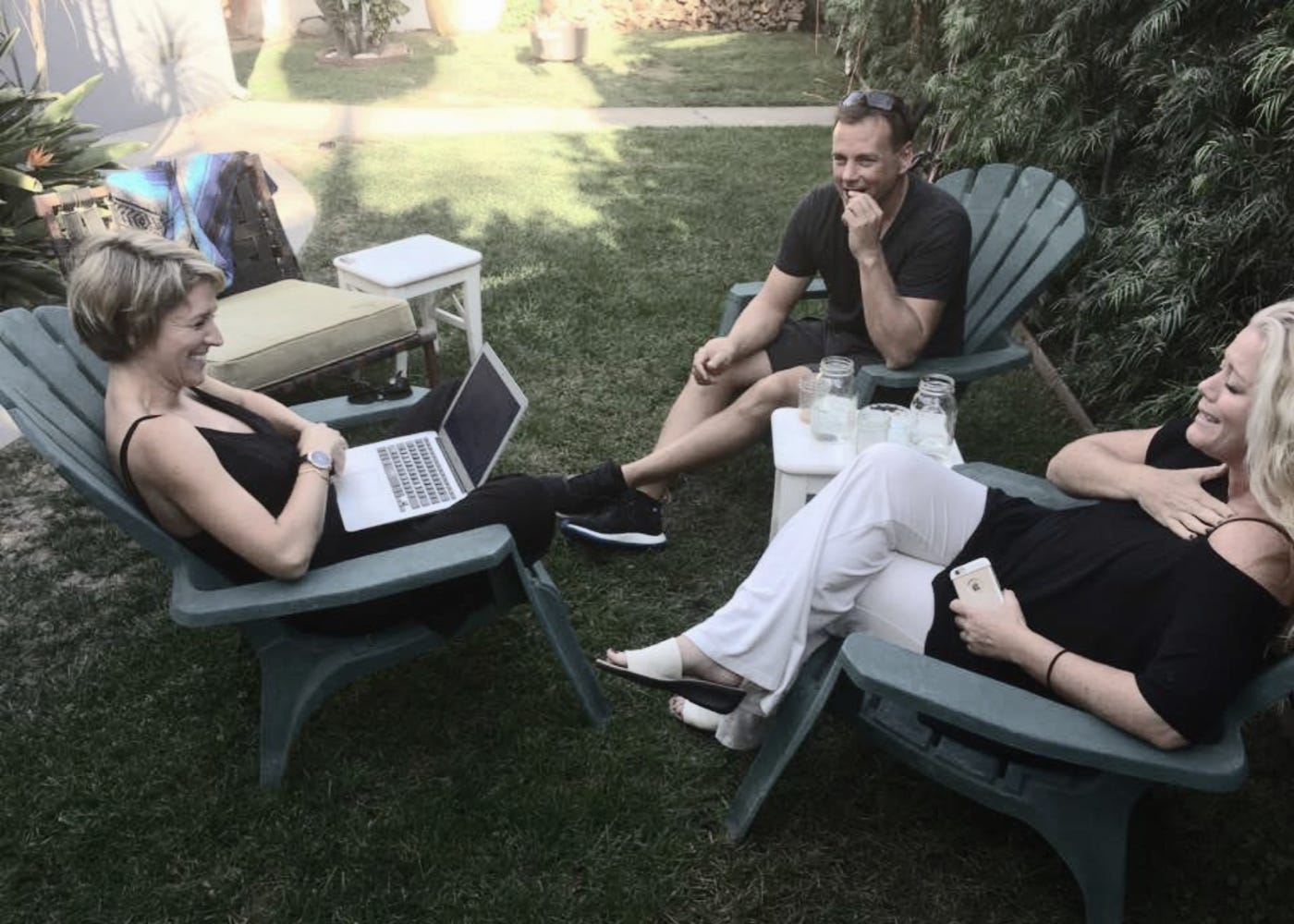
When we got back to the mainland we hit the ground running on raising philanthropic capital, under a convertible note, for our newly minted benefit c-corp. I rode a major learning curve not only stepping into the world of investment capital and what all of that meant, but setting up the actual infrastructure of a for-profit logistics company at the same time. From a picnic table in the front yard of a shared rental in LA’s Venice neighborhood —Taylor lived there, plus a few subletters to keep our costs down — we chose banks and HR platforms, set up document storage and email, and interviewed our first potential employees. The crowdfunding platform had officially gone under and Taylor was also going through bankruptcy in Canada, so everything was done in my name.
At the time I believed deeply in our model of a social enterprise, or for-profit for-purpose business, having learned about it in grad school as a less generosity-dependent model of solving big problems (more in What does it mean to help?). I saw it as a more realistic and sustainable way forward, swimming with the tide of capitalism instead of against it but centering people and purpose over profit. Today I admit I have less confidence in social enterprises as the answer to reversing where we’re headed — I’m interested in more radical change, which sometimes involves a charitable approach that decouples from the buy/sell forces of capitalism.
“For the master’s tools will never dismantle the master’s house. They may allow us temporarily to beat him at his own game, but they will never enable us to bring about genuine change.” - Audrey Lorde
On paper, the business model for Journey made sense. Raise capital to get going, while properly setting expectations with impact-driven investors. Set up vendor relationships, build a trip model that costs 1/3 of the total price point yet is still affordable to target audiences (we managed to swing a trip with less than $500 per-person expenses for five days, and priced it at around $1600 not including flight). Invest in traditional marketing, but encourage word-of-mouth from life-changing trips. More people join, the company scales, and travelers and businesses both contribute to impact project costs. Eventually, according to Taylor, we build 1,000 homes and prove scale, on our way to world domination for good. I had more modest expectations, but the vision was painted.
As time went on, the actual business model became a head-scratcher. It was like a triangle with opposing points oscillating in space, each one rising in importance then falling again: one corner represented the low affordable price point of the trip; the next the need for the trip to be mind-blowingly good, safe and well-supported; and finally, the impact project needed to be covered in full every time. On top of it all, we needed real revenue margins in order to grow the business and pay our team.
The trips were working and people loved them. We were bringing in trip fees, paying vendors and staff, advancing bookings on future trips. Our team was motivated and skilled. Our impact partners were world-class. Our social media was growing thanks to our sweet spot of our feel-good stories in beautiful locations.
But the points of the triangle remained diametrically opposed. When we lowered the trip cost to appeal to younger audiences, the production got tight and adding bells and whistles was harder, and we’d inevitably make almost no margin. Without revenue margins we struggled to grow. When we tried to bring in more revenue by committing to more future trips, we ended up incurring major risk in the process by throwing down deposits for hotels, buses and impact project costs without yet knowing we could fill them. When we tried to raise the cost of a trip, it didn’t sell. When we worked with Instagram influencers to promote the trips (“Come with me to build a home…”) we sold more spots but gave away even more of the margin. And relying on abundant generosity to cover the substantial project costs — sometimes $20,000 to 30,000 for a single trip — was at odds with our audience of tight-walleted millennials and genz-ers — yet this is exactly who we wanted to engage.
We had figured out how to make a meaningful experience. We never figured out how to shoehorn that meaningfulness into a sustainable, growing business.
In the final months, I was advancing trip costs on a personal credit card, and both Taylor and I had stopped taking a salary. Before that he was taking only minimal pay because of his bankruptcy. The cause-driven element made the situation extra disorienting. I still have a roof over my head and parental safety nets, I remember thinking, what do I even deserve as I help these families who have nothing?
On the other hand, by that point I was basically working for free so that my peers could go on fun, low-cost and life-changing trips—each paycheck slipping away in the form of discount codes—and this was not only unsustainable, but a recipe for rising resentment. Could they really not afford it, I couldn’t help but think sometimes, or is there an emotional price-point that feels good to them and as a result, prevents me from getting paid? If they knew how it might change them, would they pay more? Would they even pay it forward, covering the next project? What’s the value of finding our humanity?
If we wanted to keep building Journey, we needed to figure out how to both take something home and leave something behind.
It was a puzzle with a missing piece, and we never found it. In order to make margins that supported our operations and future plans, we’d need scale — hundreds of people booking trips — and that kind of scale required major marketing and philanthropic giving. Two years in, out of cash and investors done, staff were put on alert. One bright sunny day back in LA, as I drove between meetings in the posh part of West Hollywood, I knew what I had to do. I called Taylor and told him it was over. We’d do one more trip on my credit card, then wrap it up.
But I’m getting ahead of myself. Before this point, we ran a couple dozen really beautiful, powerful impact trips for hundreds of people. In hindsight the volume and scale we achieved is staggering, especially factoring in that these were all international trips, produced by a scrappy team with no prior tour logistics experience and on jam-packed timelines.
During that time, Journeyers built homes across Mexico, El Salvador, Nicaragua, Colombia, Guatemala and Costa Rica, as well as fixing and painting schools, funding and building a major community skate park in Costa Rica, supporting women’s empowerment training in Nicaragua and recovery programs for refugee camps in Greece.
The high points of a five-day Journey were this: arrive on a Friday, drop bags in the room of the local hostel for a welcome dinner. At the crack of dawn, board a school bus and head to the project site. Orientation from the local leaders—often college students who served as foremen for the weekend—in Spanish, in the hot sun.
Then construction time, alongside local volunteers and the family who will live in the home, working four or five hours until lunch. One time my family proudly carried a chicken from the back yard and asked if anyone wanted to do the honors of killing it. It was a big deal for them to contribute meat to the meal, but I still couldn’t try the chicken stew. The hardest hours were after lunch, hot and sleepy, and inevitably some part of the build would go wrong and need redoing, remounting a crooked piece of siding or adjusting a window frame.
At sundown, head back to camp and roll out a sleeping bag on the concrete floor of a local school. Stand in line for stew and bread (good luck to me, not only mostly-vegetarian but gluten-free: I’d bring stacks of macrobars) and sleep hard.
On Sunday, wake up to rooster calls and church bells, and get ready to do it all again. Sometimes we’d do a group meditation or grounding, a reminder of why we’re there and how to stay in our bodies when things get hard. The work is more familiar on day two, somehow more energy to hammer and pound. Spanish-English gets easier by the hour.
The home is finished in the nick of time, just as the sun starts to go down.
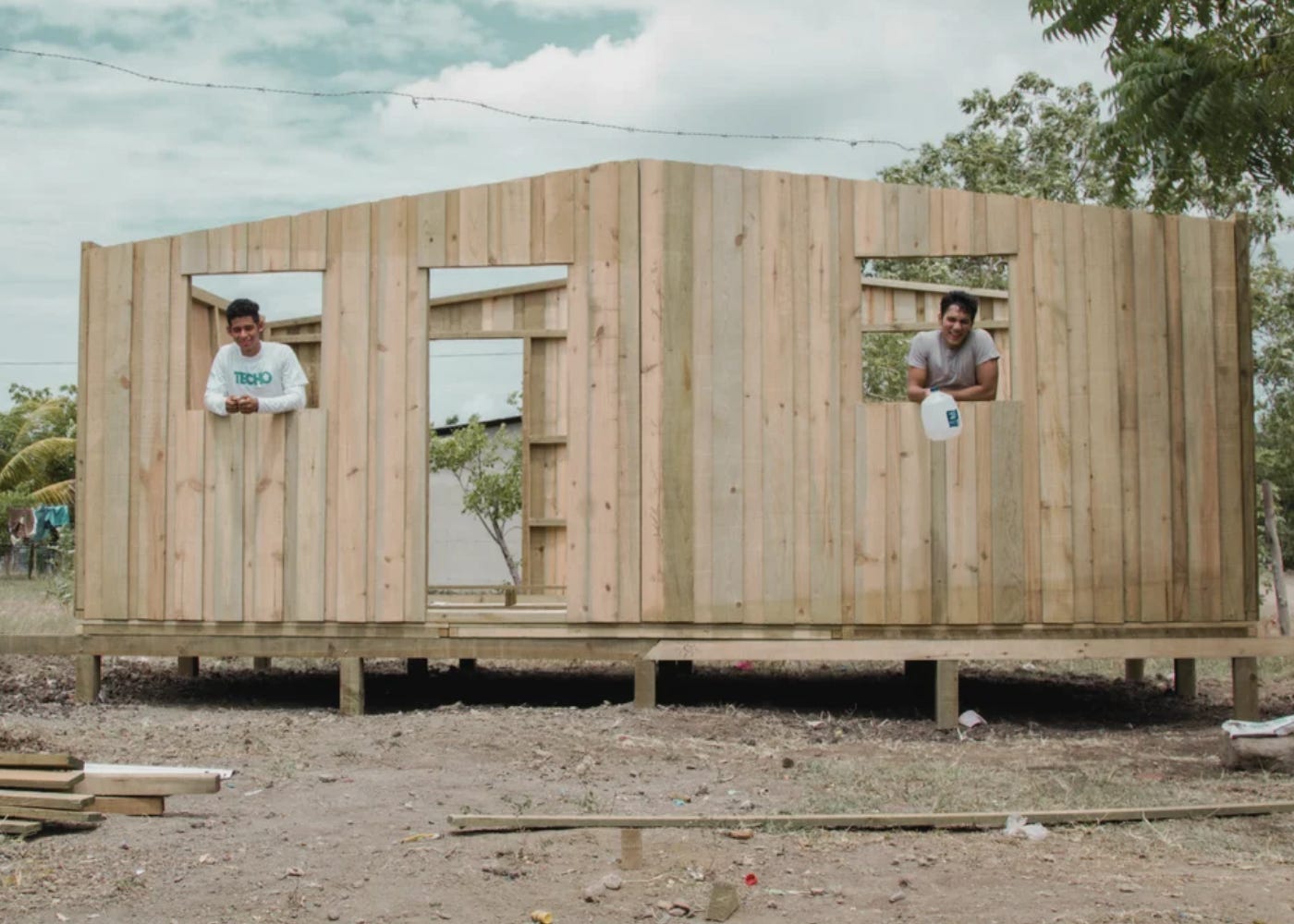
The homes were simple and prefab, with a few room divisions, meant to last 10–15 years. It was not fancy, but it was a significant step up. Over the years I saw huts with grass roofs, lean-tos made from tarps and cement blocks, dirt floors and fire pits, all vulnerable to the elements, disease and opportunistic neighbors. The new homes had a door you could lock, and for some families it was their first time owning a key. We’d hold an official ribbon-cutting ceremony when the home was done, where the family would cut through a ribbon pulled tight across the front door and walk inside for the first time. Emotions would run high. Moms and dads would grin and sometimes cry, kids would run through the rooms. It was beautiful.
Then our group would hop on a bus that night to the beach or the jungle for the integration: two days of nature, processing and connection at a hostel or surf lodge. This was a time for making sense of what you saw and learned, getting back in your body with yoga and meditation, talking it over with new friends over dinner, journaling and listening inward.
Coming out of my years of complicated international anti-trafficking work, I knew how important it was to avoid “white saviorism”— jumping in to rescue another population as if we Americans knew best. From the beginning, Journey followed the lead of the nonprofit TECHO: a long-established organization working across Central and South America that was youth-led, values-driven and a real success story. We never went into communities without them, and we relied on them to dictate priority home build locations, number of participants and appropriate ways to show up.
Still, it was never simple. We rolled in with our crew, some wearing designer sunglasses and sneaks and wallets stuffed with traveling cash, to spend two days with people who owned and earned next to nothing. We were soft, dehydrating in the hot sun and taking extra breaks in the shade while others worked. Our intense weekend experience touching poverty conditions was ephemeral, but it was their life. No matter who you are, it throws you for a loop.
And occasionally, we faced other complications. One trip to Costa Rica ended in nearly all of the 55 participants getting sick from local water. Taylor and I watched it unfold on a WhatsApp thread from the picnic table in Venice, I remember my jaw dropping as both the team and traveler chats blew up. They fell like flies, one after the next. The healthier helpers who started by going room to room with water and meds would eventually text something like “oh no, I think I’ve got it too.” We were horrified and there was almost nothing we could do — our facilitators were there, holding it down (also sick) and logistics were not the central problem. Two ended up in the local emergency room, including the one traveler who didn’t buy the required travel insurance (of course). The rest got in the airport vans, sick bags in tow, but the vans got stuck behind a terrible car accident and the text thread shifted from bodily fluids to who was missing their flights. It was a nightmare. Somehow the group made jokes on the chat even in the gnarliest moments, and they ended up bonding more deeply other trip.
In another hope-it’s-a-once-in-a-lifetime experience, on an early Journey to Nicaragua I had a gun pulled on me. I was walking with my co-facilitator from the nonprofit, on a dark rural road winding from the hostel to a nearby restaurant. Like an idiot, I was navigating by staring into my iPhone map app. A pickup truck pulled up and its side doors swung open. She’s Colombian, and she told me later that her greatest fear is kidnapping: so when they said something to us in Spanish (probably “hand over the phone,” it was too fast for me to understand) she yelled: Run! We did, and miraculously they did not follow or shoot us in the back for the phone, which I was told later was not out of the question. We made it to a security guard on the next street who called the hostel and sent a pickup. The memory has always felt surreal, like I was divinely protected and nothing was going to happen. But I can’t say that for sure.
On the same build trip as the local chicken lunch, I connected deeply with an eight-year-old, a dark-haired girl named Rosie. We sat at a table and drew together for hours during the build (one of my learnings was to bring art supplies). Her English was good, and we talked about school and the things she liked. I’m childfree by choice, and have been clear on this for my whole life, but for the first time I had a moment of really imagining being someone’s guardian. Her mom must’ve sensed it, and at the end of the day she asked me a question in Spanish that I understood as: Do you want her to go home with you? It stopped me in my tracks. Of course I said no, it wasn’t possible. And she was a loving mother who would find her way. But the offer, and its hope-fueled sacrifice, stayed with me.
Journeys were a double-edged sword, filling you right up then zipping you open so all the new feelings, thoughts, questions spilled out in front of you, to see and to touch. Maybe you’d know what to do with it, maybe not yet.
Journey was an outward expression of my own restless spirit, my search for meaning. I was a few years into a marriage which also felt unsettled, and a decade into a nonprofit-facing career that felt stymied by its limitations and limited resources. Journey gave all of that restlessness somewhere to go.
It gave me a way to adventure and ask big questions, weaving together my desire to make positive change with a yearning to live a life that was free and uniquely mine. It gave me a touchpoint to our humanity, our humanness, after a decade of experiencing social challenges through screens and email campaigns, and feeling like solutions were distant and out of control.
Journey came from not only travel experiences but a love for other immersions like Burning Man, summer camps, wellness retreats—our recognition that in containers far from everyday life, new ways of thinking and being are more possible. They help us remember that everything is relative and the world is malleable. The trick, of course, is bringing it home.
I learned how to sell a big idea, raise investment, produce these experiences, manage risk, lead a team, make a payroll. I learned how to fire someone. I learned how to shop for Colombian kidnapping insurance, one of our final business expenditures.
I learned that creating something meaningful and sustainable are two different problems to solve. And eventually, painfully, I learned how to recognize when the math simply did not add up.
The failure came hand in hand with great accomplishment. We raised around $500,000 in impact investment capital for the company, and $500,000 for impact projects. Journeyers helped fund and build 150 homes, 5 school renovations, an entire city block sized skate park complete with technical concrete pours and half pipes, and other local programs in 9 different countries. That means thousands of families and kids living differently today, with more well-being and dignity. This is significant.
These days, if I’m honest, I do not seek out hard-labor service vacations. My current working life is impact-driven, high-stakes and logistically complex, running a $2.5M charitable organization to change norms without selling anything but an idea. if I’m going to take a vacation I want to sit on a beach and zone out with a novel and a sparkling beverage.
I’m sure this will keep changing, as life does.
Taylor went on to build another company around his love of public speaking — a speakers bureau matching people to TEDx talk — and he’s still organizing home build trips on the side. He still leverages that coffee a day formula for giving and works with TECHO to make it happen. He texted me this weekend:
Always gotta say hi from Oaxaca 😊
Hiiiiiiiiii
100 people here that all raised $3300+ each… 400 Mexican volunteers… 52 houses this weekend…
thanks for starting this with me
So in some form, the Journey continues.
Watch a video from our Journeyer days at wejourney.co.